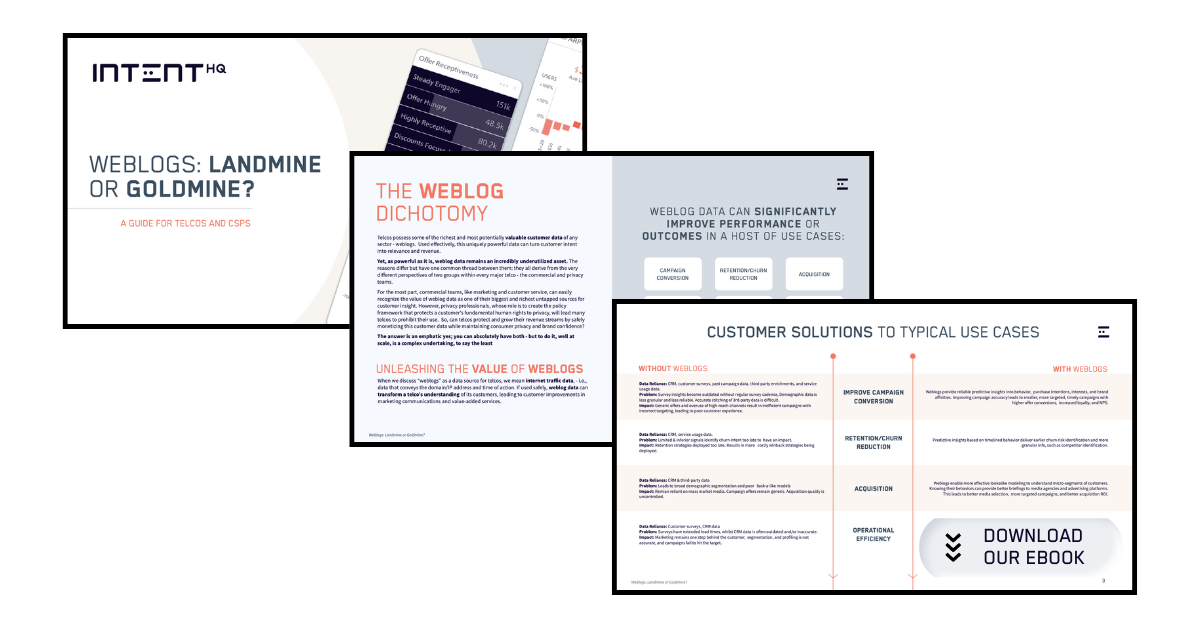
Telco customers reward true personalization with high ROI. At the same time, they demand a brand experience that protects their privacy. A dataset that could solve both of those issues, when used correctly, is weblogs. An incredibly underutilized asset that all telcos possess. However, concerns about privacy, scalability challenges, and fears of potential misuse have created significant hesitation.
How can telcos find the right balance, being respectful of customer data? And yet harnessing its power to deliver the relevance customers expect?
What to expect from this eBook:
What the main blockers are for telcos when it comes to using this rich data source and how to overcome them
How we successfully utilize weblog data in a privacy-safe way to ensure customer identities are protected throughout all processing stages
The ways in which Intent HQ process the massive amounts of data weblogs provide to ensure marketers and data scientists derive the most value out of them
The benefits of using this under-utilised data source can have for your marketing activities
Download our eBook to find out how to utilize your weblog data in a privacy-safe way to supercharge your marketing activities.
By no means all of the regulatory action under GDPR has been accomplished through fines on organizations. It is expected that the EU legal consensus regarding privacy will strongly influence their behavior. Since GDPR’s introduction, most regulators have taken a consultative stance, giving advice and looking for incremental improvements in behavior.
Data lakes have been around for eight years, and while the original concept was promising, many of the lakes have unfortunately turned into data swamps. This has prompted criticism of the concept itself.
El auge de la digitalización en España y en otros países está cambiando los hábitos de consumo, con un auge de las compras online, el entretenimiento e incluso la atención sanitaria. Las empresas deben evolucionar y aprovechar las herramientas de análisis basadas en IA, como Intent HQ, para personalizar las ofertas, interactuar a través de los canales preferidos y adelantarse a las tendencias emergentes. Si no se adaptan al cliente digitalizado, corren el riesgo de quedarse atrás en este panorama en rápida evolución.