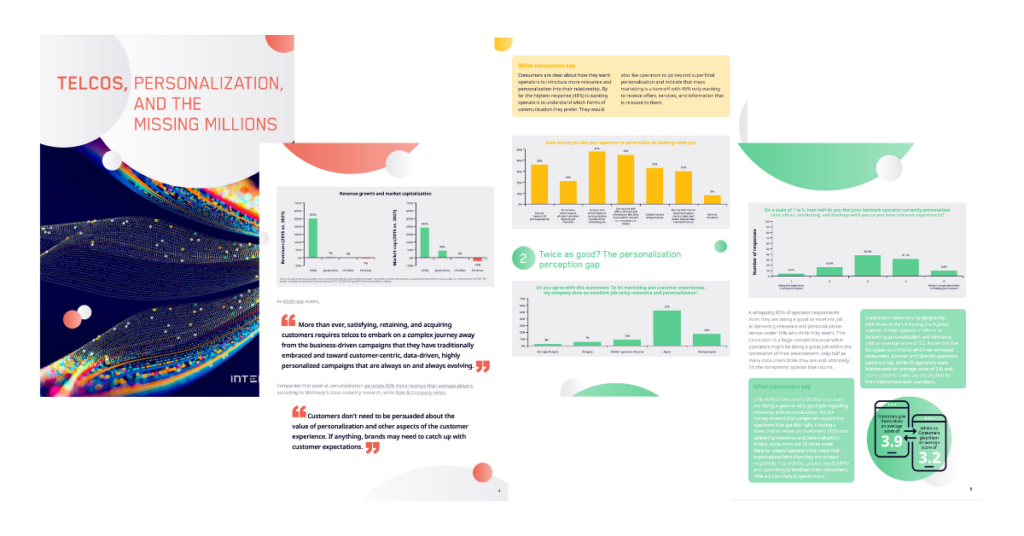
Telcos, personalization and the missing millions research report
2 min. Read
Are telcos and consumers on the same page?
Marketing campaigns are won and lost on the accessibility and quality of companies’ data about their customers – and how smartly they use it. Across every industry, this makes customers’ data a hugely valuable asset and means of gaining competitive advantage. No sector holds more data about their customers than telcos.
In the spring of 2022, we conducted two surveys. One targeted at consumers, which explored how they feel about their data being used to make marketing, offers and services more relevant and personal to them, and if operators are meeting their expectations.
The second survey probed operators about their attitudes towards using customers’ data for these purposes, how they are using it, and why they make those choices. The results highlighted that they are far from making the most of their data assets. For example, we found that less than a third of operator respondents are using weblogs from within their network data to improve customer experience and marketing to them, although this fabulously rich source of insights is unique to them.
We dug down further to extract some fascinating, more granular understanding of operators’ attitudes and concerns, which often differed radically from those of our consumer respondents. In short, we discovered that operators are leaving millions on the table and failing to meet their customers’ expectations.
Growth, levelling and decline are clearly observed across some of the major offerings as well as highlighting emerging players. As Netflix continues its global growth, many other providers of TV/Movie services are enabling their own on-demand capabilities.
There aren’t many other industries staring down a future as uncertain as telcos. A stagnant growth and a global downturn on the horizon, Telcos are struggling to keep customers without having to resort to the obvious, giving more data and voice minutes for a cheaper price.
Join our webinar and discover the game-changing potential of sustainable marketing and revolutionize your brand’s impact on the environment and improve your bottom line in the process.
Personalization and customer value management are already a key growth driver for telecoms. McKinsey says about 70% of Telecoms have at least a pilot project underway and many are successful.